




Blog
Central Air Conditioning vs. Ductless Mini-Splits
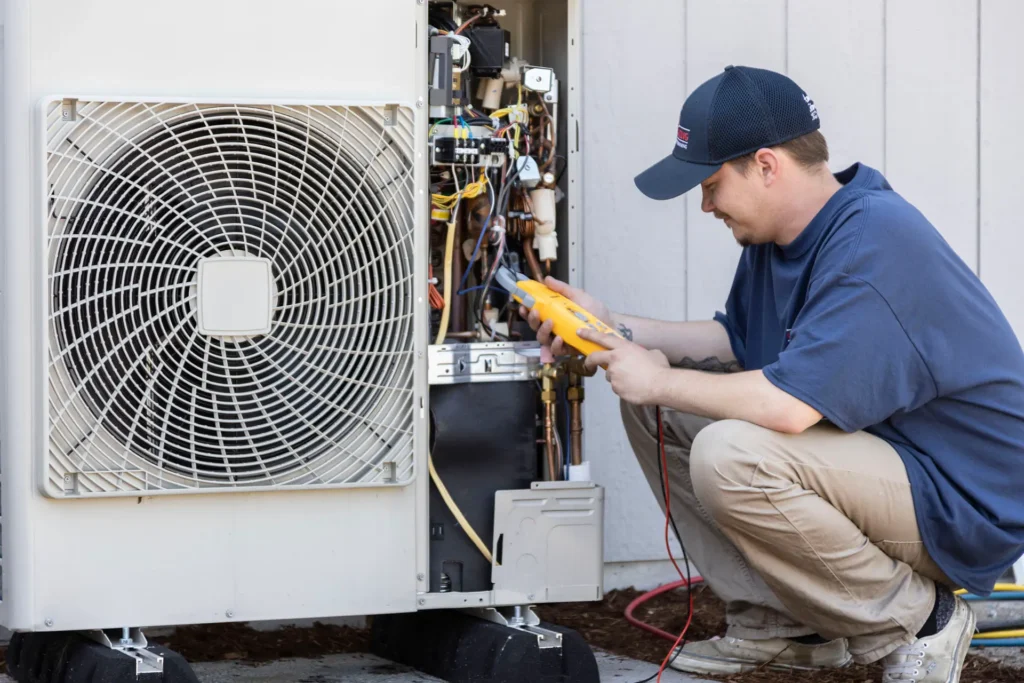
An effective cooling system is critical to home comfort and safety during the warmer months of the year. Central air conditioning and ductless mini-split systems are two popular options for cooling your home. How do you know which option is the right choice for your home?
The best option depends on factors such as your home’s layout, existing ductwork, cooling needs, budget, and comfort preferences. We’ll review how each of these systems works and share the key differences you should consider when investing in a new cooling system.
How Central Air Conditioning Works
A central AC system cools air through a central indoor unit and distributes it throughout a home via the ductwork. It takes air from outside, cools it, then pushes it into each room using a network of ducts and vents.
The outdoor condenser houses the compressor, which pressurizes refrigerant, and sends it to the outdoor coil to cool the air. The refrigerant moves through the outdoor coil, and a fan blows outdoor air across it, releasing heat and cooling the refrigerant which then moves inside.
The indoor evaporator coil is what actually cools the air. The cooled refrigerant flows into the indoor evaporator coil and absorbs the heat from the air passing over it. While absorbing the heat, the refrigerant evaporates back into gas and cycles back to the condenser to repeat the cycle.
The blower pulls warm air from inside the home across the evaporator coil to cool it and then pushes it through the ductwork to distribute the cool air out of the supply vents. Simultaneously, return vents circulate warm air back to the system.
A thermostat monitors the indoor temperature and compares it to the set target temperature. Once the room gets warmer than the target, it signals to the AC to start a cooling cycle. It will shut the AC off once the target temperature is reached.
How Ductless Mini-Splits Work
A ductless mini-split system is comprised of an outdoor compressor/condenser unit and one or more indoor air-handling units. The outdoor and indoor equipment is connected by a small conduit that houses the refrigerant lines, power cable, and condensate drain that runs through a narrow hole drilled in the wall. This means the system doesn’t require ductwork. Indoor units are generally mounted high on the wall and circulate cool air directly into a room.
Each indoor air-handling unit operates independently with its own thermostat and remote. The same outdoor compressor can serve one room that’s set to a higher temperature and one that’s set to a lower temperature. Each zone is controlled separately, which allows you to tailor your comfort based on how frequently spaces are used.
Ductless mini-splits are beneficial for homes without existing ductwork because they’re a faster, less invasive option.
Central AC vs. Ductless Mini-Splits: Key Differences
Both central AC and ductless mini-split systems can effectively cool a home, but they differ in installation, flexibility, and efficiency.
Installation
You must have ductwork for central air conditioning to be installed, and retrofitting a home with ductwork can be costly. Ductless mini-splits skip ductwork altogether and use a small wall conduit to connect the outdoor and indoor units. Installation for ductless mini-splits is much less invasive, especially for older homes or additions.
Zoning and flexibility
With central AC, you typically have a single thermostat that controls the whole-home temperature, though some setups include zoning dampers. Mini-splits offer custom zoning since each indoor unit runs independently. Different rooms can be set to different temperatures, giving you extreme flexibility not found with central AC.
Efficiency
Some of the cool air that travels through ductwork is often lost due to leaks, gaps, or poor insulation before it reaches a room. With a ductless mini-split, air is delivered directly to the room from the indoor unit, which makes this type of system more cost-effective overall.
Advantages of Central AC
For larger homes with existing ductwork, central AC is often a great choice for homeowners because it provides even cooling throughout the house. Central AC uses a single system that is low-maintenance and highly convenient.
Additionally, indoor air conditioner equipment stays out of sight, keeping walls and ceilings free. Since central AC systems have been around much longer than ductless mini-splits, parts, service, and expertise are widely available.
- Even, whole-home cooling
- Low maintenance single system
- Less visible equipment
- Parts and service widely available
Advantages of Ductless Mini-Splits
Ductless mini-split ACs offer a level of flexibility that central AC lacks. With each indoor unit operating independently, users can cool only the rooms in use, saving money on electricity and cutting energy waste in empty spaces.
Installation is generally quick and minimally invasive since there is no need for ductwork. Ductless mini-splits are an excellent option for older homes without existing ductwork or homes with additions. They’re also often more energy efficient than central AC that loses cool air through leaks or gaps in ducts.
Lastly, each zone has its own controls which is ideal for homes with rooms that need different temperature settings, such as a sunroom that stays warm and a basement that stays cool.
- Flexibility and enhanced controls
- Targeted cooling with less energy waste
- Quick and minimally invasive installation
- Save on energy costs
- Zone cooling for different spaces
Which System is Better for Your Home?
The system you choose depends on your home’s layout, ductwork, and cooling needs. If your home has existing ductwork that’s in good shape, central AC might be the better option. Central AC offers even, whole-home cooling that’s low maintenance and convenient. Central AC is also more affordable as long as you have existing ductwork in place.
If you’ve recently added an addition or have diverse cooling needs in different areas of the home, a ductless mini-split system is your best bet. Ductless mini-splits are highly flexible and offer targeted zone cooling. A ductless system can be more budget-friendly than having new ductwork installed for central AC.
Contact Us
G&G Heating and Air Conditioning provides central AC and ductless mini-split installation in Olympia and Tumwater, WA. Whether you’re looking at getting central AC or investing in a ductless mini-split, our experts offer fast and reliable air conditioner services.
Call us at (360) 499-6604 for a new AC installation or schedule an appointment online!
Schedule Online(360) 499-6604Share this article